Collection exhibition, Exhibition, Group exhibition, News
2022-01-14 – 2022-03-12
Monopol Gallery, Warsaw
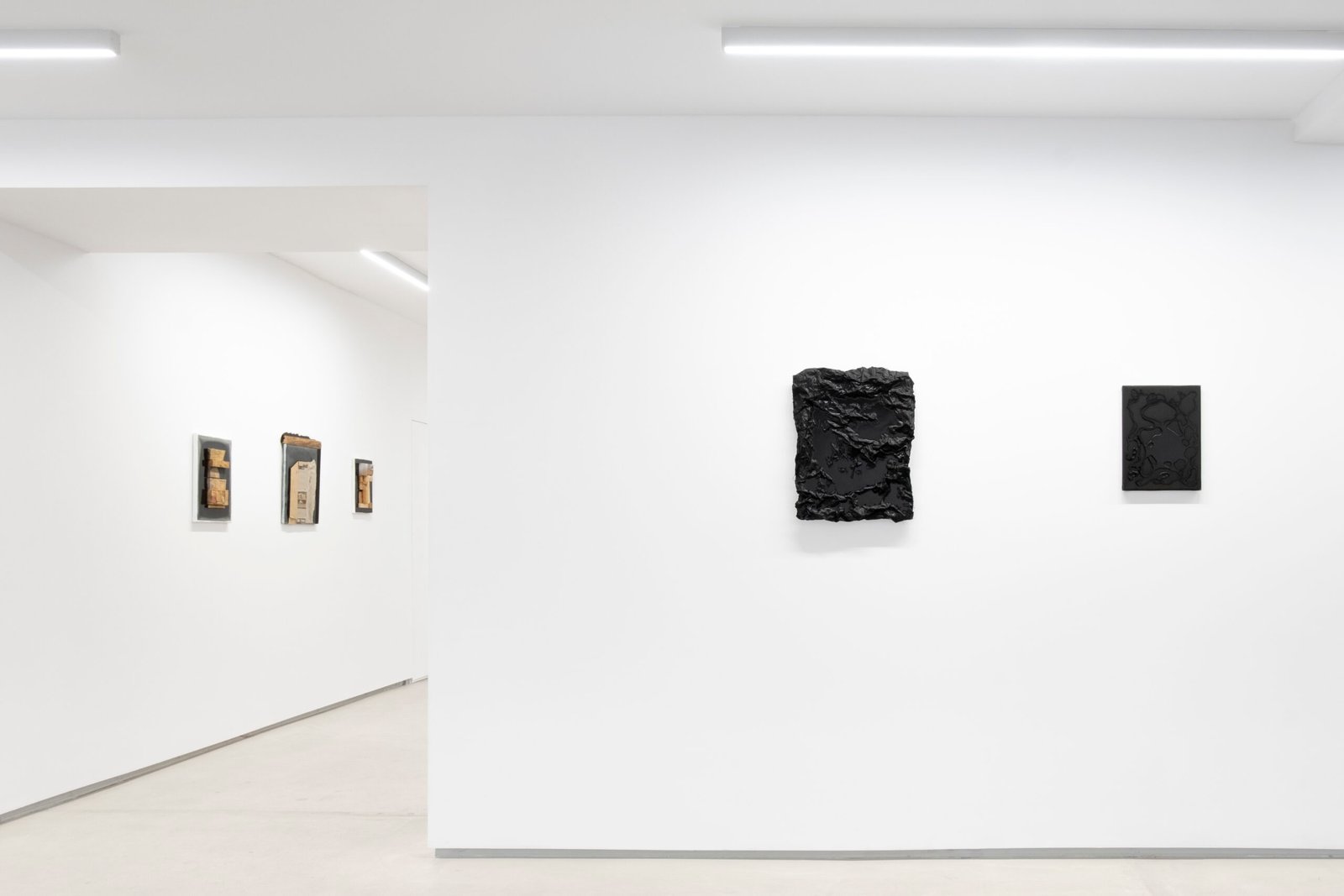
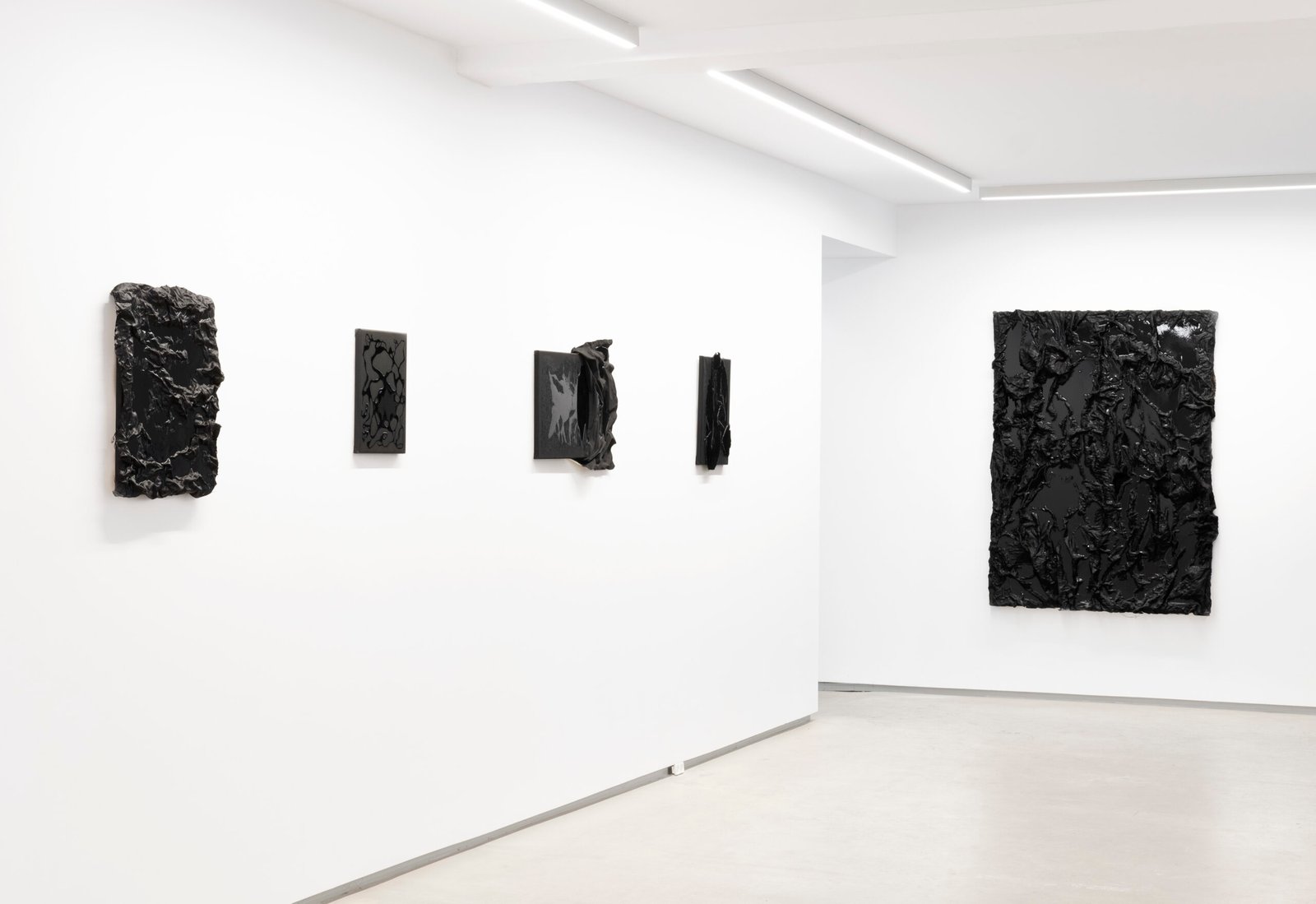
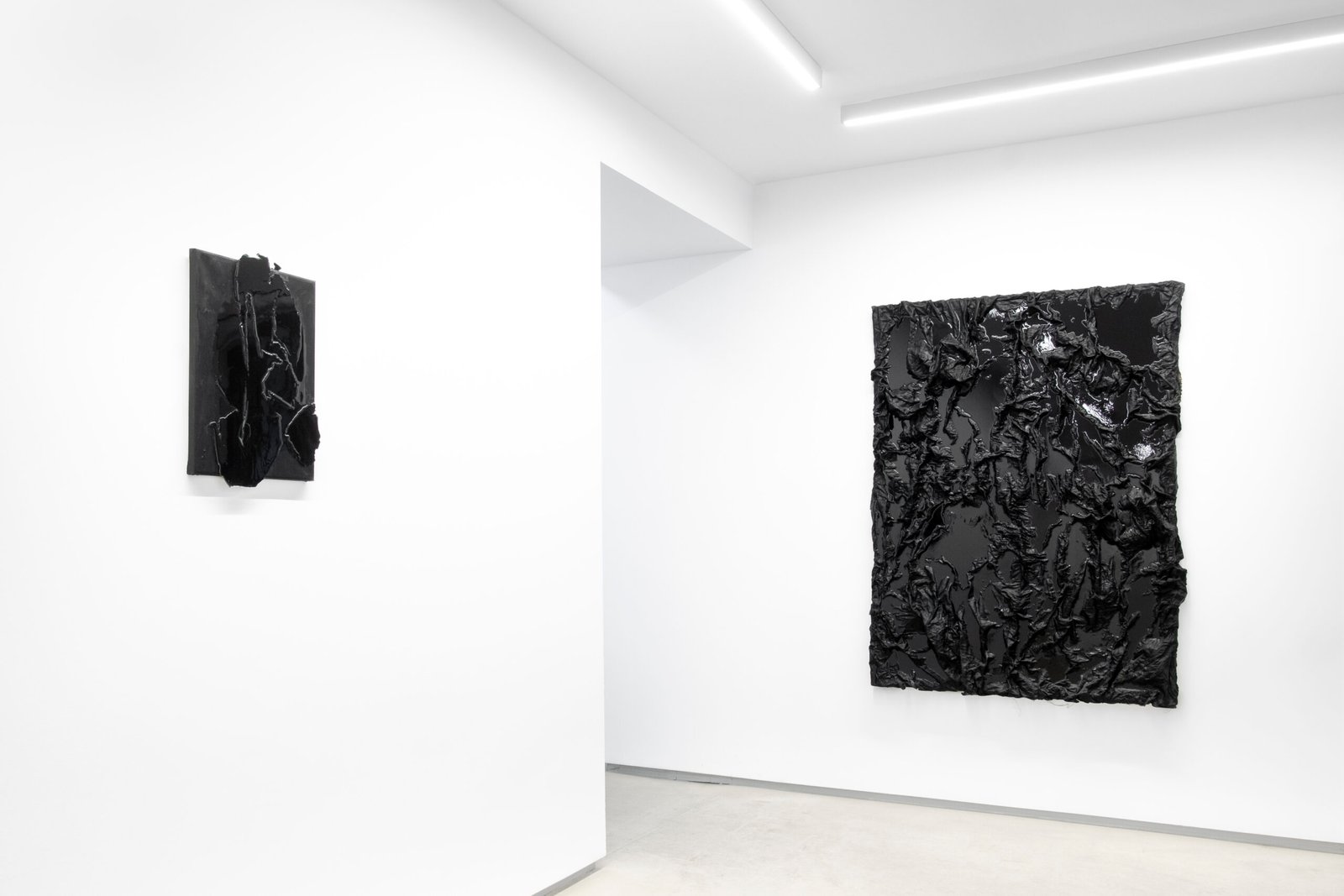
Czarno to widzę (“I see it black”) is a paraphrase taken from colloquial Polish. It does not appear in the phraseological dictionary; it means the same as seeing something in dark colours or painting something in black. In translation it gets distorted and loses its original sense. It heralds a fatalistic vision of the end and is steeped in pessimism. Yet it does not mean stagnation or giving up on taking action. It is a kind of balancing on a tightrope, playing with fire. So let us begin from the end – from a bad omen – without necessarily considering whether it came true, and move in small steps towards its source, to the rhythm of a misfired elegy on the death of painting.
A painting understood as a material object consists of a few basic components: heavy linen or cotton fabric, nails, a wooden frame and bone glue. These are humble human products. Heraclitus of Ephesus saw the primal principle of the world in fire. He taught that the universe was created by no god and no man, but always was, is and will be an ever-living fire. Man has mastered fire, learned to kindle it and domesticated it. He has locked it in lighters and fireplaces. The same man often plays with fire, drops in for a moment as if to fetch fire, avoids it, guards against it and fears it like fire. He wields fire, has mastered the fiery breath in order to breathe it out to the rhythm of Skrillex and impress onlookers. He causes fires and creates burnt ruins that turn into a desert of reality, where one can feel only sadness, stagnation and the smell of petrol.
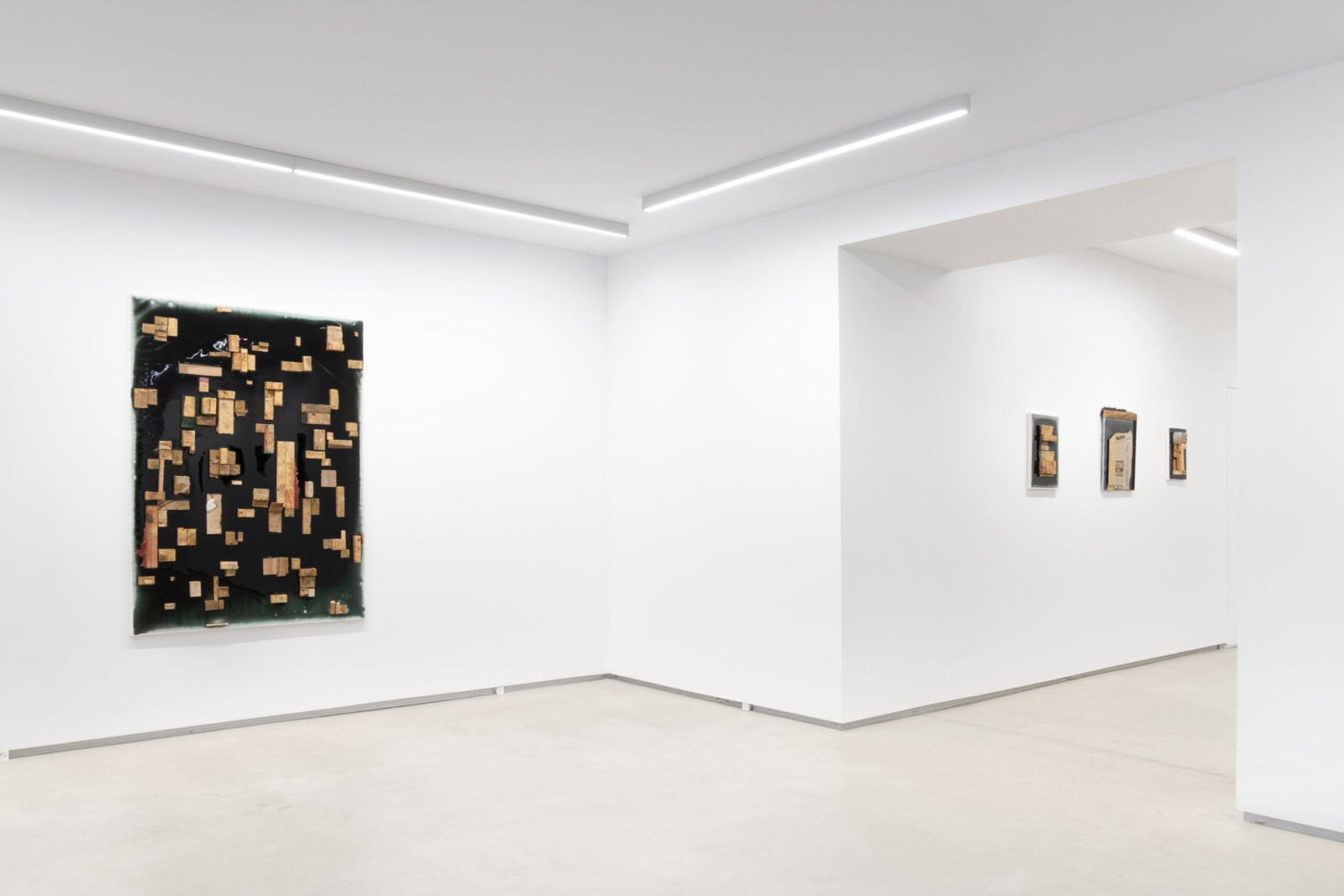
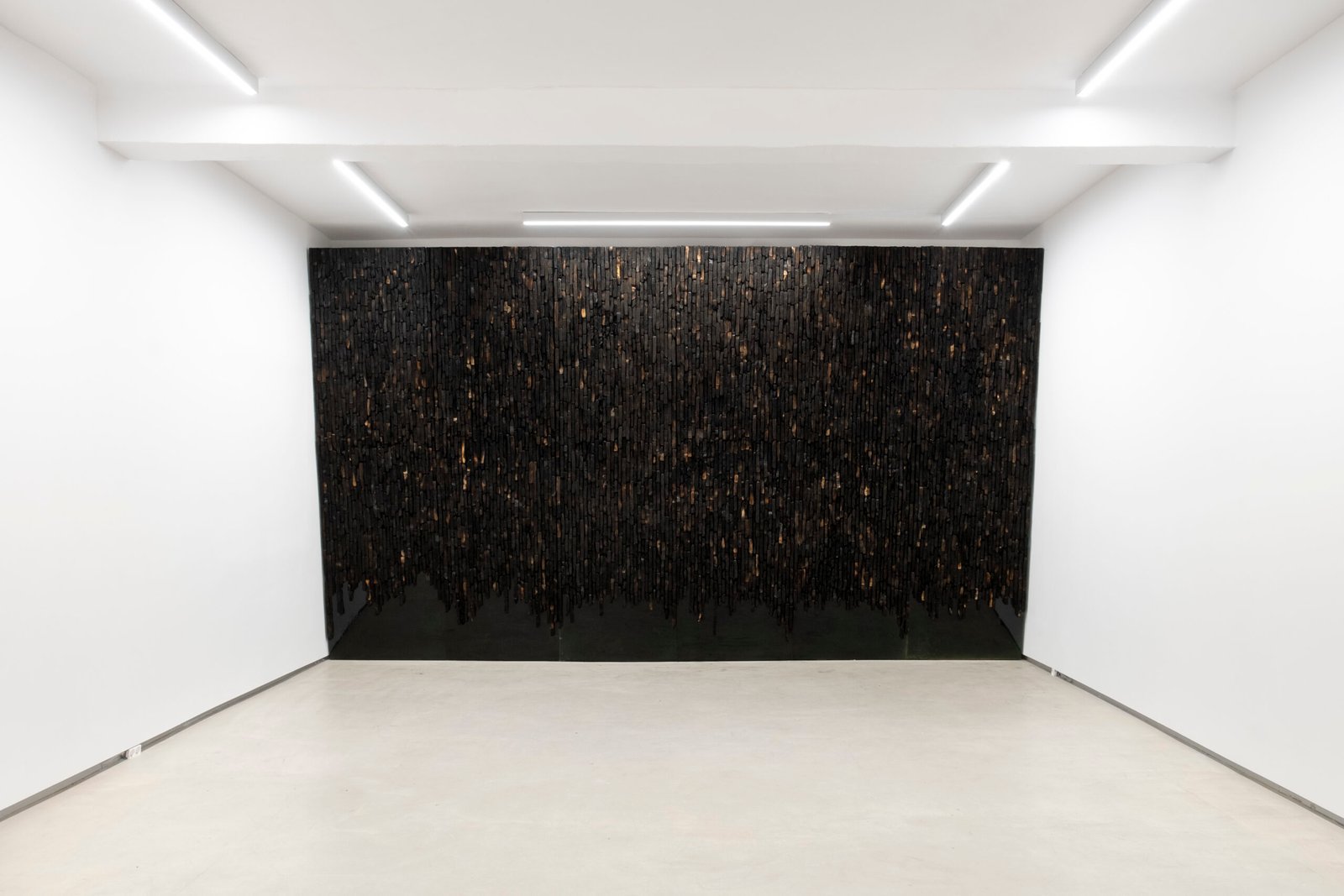
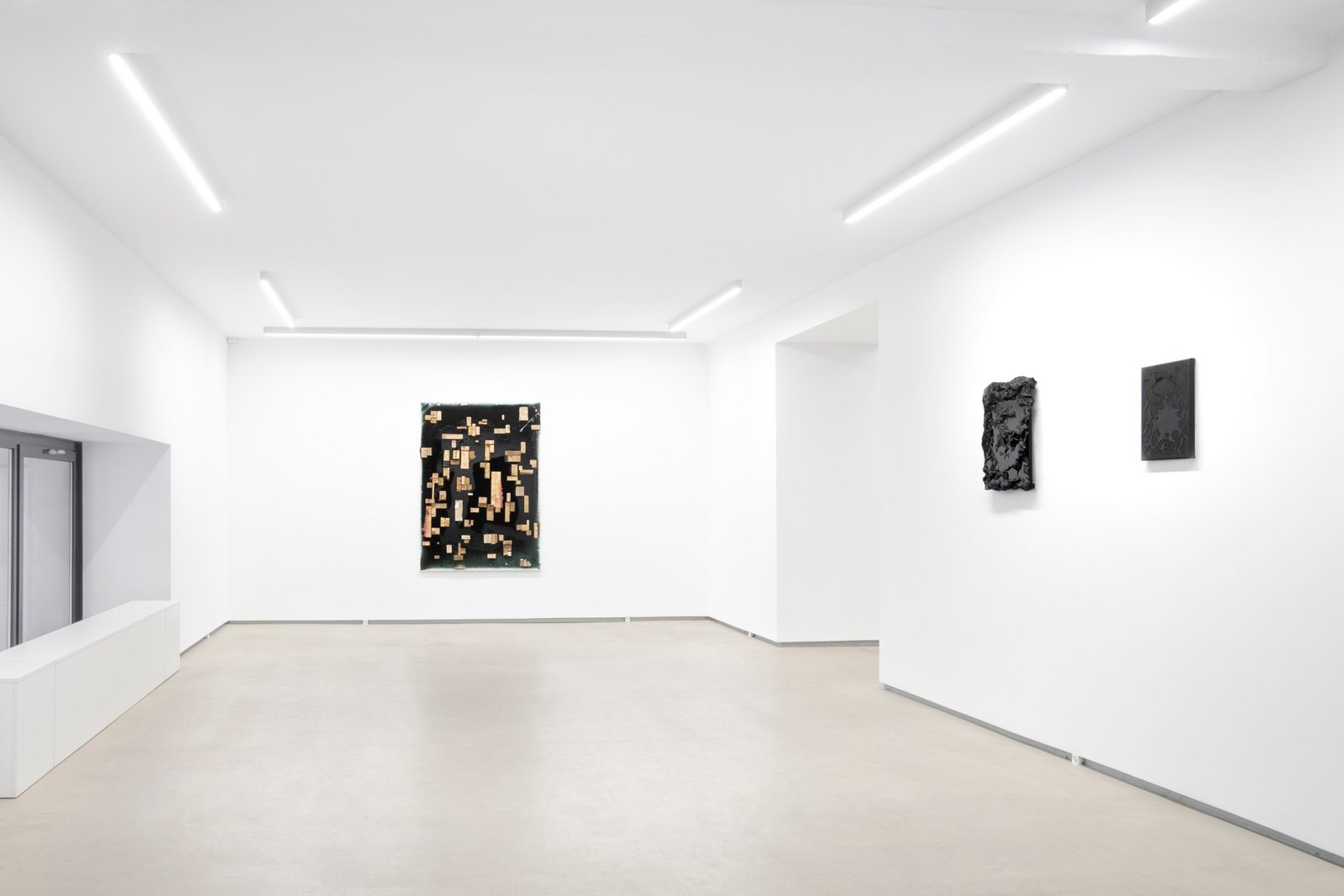
The space is filled with black mirrors. Sometimes they resemble apartment blocks with lights shining in individual windows. At other times, cities seen from a bird’s-eye view. Their topography is based on the principle of repetition, on grids of verticals and horizontals in a world of rational, precise geometry. They are like futuristic machines in front of which we act out the myth of Narcissus, strolling unhurriedly. It is an inverted panopticon in which we control ourselves. A gloomy hall of mirrors, simulating the environment around us. A dystopian vision of the future foretold by man. The fear that overcomes us is mutual – it touches us, standing in front of a finished painting, just as it touches the artist standing in front of an empty canvas. Powerlessness in the face of nothingness can be overwhelming. Emptiness demands to be filled, demands the intervention of a human actor. Returning to the bare canvas may resemble the question of the beginning of the world, its arche.
Franciszek Smoręda